
International Symposium in Cambridge Examines Ageing, Longevity and Brain Health
LASA co-organised an international symposium in Cambridge bringing together researchers and clinicians to discuss brain development, dementia, resilience and healthy ageing.
On 8 April 2026, the international symposium “Frontiers in Aging, Longevity & Rejuvenation” was held at the Woolf Institute, Westminster College, Cambridge. The event was jointly organised by the Luxembourg Academy of Sciences and Arts and the European Academy for Nutrition, Dietetics & Behavioral Health.
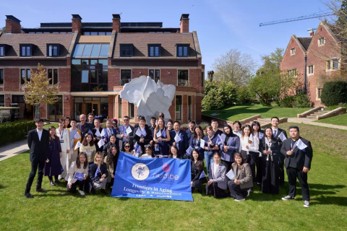
Approximately fifty scholars, clinicians and researchers took part in the programme. The symposium created a focused setting for discussion on brain development, cognitive ageing, dementia, resilience and the broader scientific questions surrounding longevity.
From Brain Navigation to Cognitive Ageing
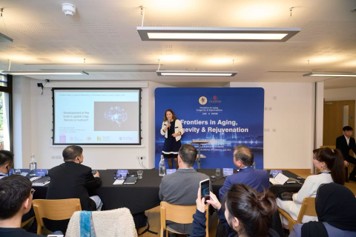
One of the principal presentations was delivered by Professor May-Britt Moser, who shared the 2014 Nobel Prize in Physiology or Medicine for discoveries relating to the brain’s navigation system. Her presentation, “Development of the Brain’s Spatial Map: Nature or Nurture?”, explored how the neural systems that support spatial orientation develop and how biological and experiential factors may interact.
Research on the brain’s internal representation of space has implications that extend beyond navigation. It contributes to wider understanding of memory, learning, development and neurological change. In the context of an ageing symposium, the topic also encouraged discussion about how fundamental neuroscience can inform future approaches to cognitive health.
Dementia, Resilience and the Protection of Brain Function
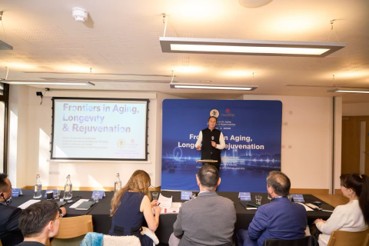
Professor James B. Rowe of the University of Cambridge presented on “Dementia and Resilience”. His work focuses on protecting brain function in people at risk of dementia and restoring function where symptoms are present.
The idea of resilience is important because ageing does not affect every person in the same way. Biological processes, social conditions, education, physical and mental health, environment and individual experience may influence how people respond to neurological change. Understanding resilience requires cooperation among clinical science, neuroscience, psychology, public health and social research.
The discussion also underlined the need for careful public communication. Longevity and rejuvenation are terms that attract considerable attention, but they can be associated with unrealistic promises. Academic dialogue should distinguish between established clinical knowledge, emerging research, experimental approaches and commercial claims.
Why an Interdisciplinary Approach Matters
Ageing is not only a biomedical process. It also has social, cultural, economic and ethical dimensions. Longer lives raise questions about quality of life, independence, care, intergenerational relationships, urban design and access to health services.
The arts and humanities also have a role. Music, visual art, literature, design and cultural participation can shape how people experience ageing and how societies understand memory, dignity and identity. Interdisciplinary discussion can therefore help connect laboratory research with the realities of individual and community life.
LASA’s participation in the symposium reflected the Academy’s interest in bringing different forms of knowledge into conversation. The Academy does not seek to make clinical recommendations or promote unverified interventions. Its role is to support serious exchange and responsible communication across scientific and cultural fields.
International Academic Exchange in Practice
The Cambridge symposium demonstrated the value of a concentrated academic format. Rather than attempting to cover every aspect of ageing, it brought together selected perspectives that could inform one another. Keynote presentations were followed by discussion and an expert roundtable, allowing participants to consider both scientific detail and broader implications.
For LASA, this type of event offers a practical model for international cooperation: a clear subject, qualified contributors, a manageable scale and space for genuine exchange. Such activities can help a developing academy build relationships based on content rather than ceremony.
Continuing the Conversation
LASA intends to maintain an interdisciplinary interest in health, ageing and human development. Possible future themes include brain health, healthy longevity, nutrition, social participation, technology for independent living, ethics and the role of arts and culture in well-being.
Any future activity will be presented according to its actual scope. Participation in the symposium does not imply endorsement by LASA, its Members or speakers of any product, service or commercial claim. LASA’s contribution lies in academic exchange, research communication and the development of responsible international connections.
The symposium in Cambridge was an important step in this direction and provided a substantive foundation for further discussion.